Book Overview
Most SMEs are not failing because entrepreneurs lack passion, talent, or work ethic.
They are failing because they do not have a financial model.
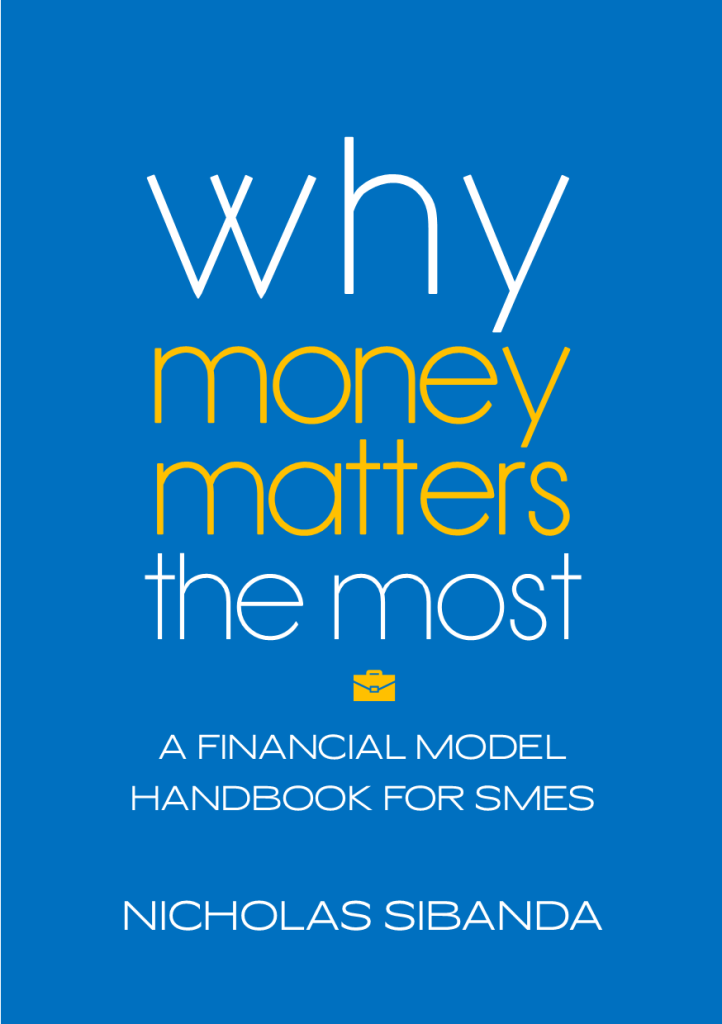
Why Money Matters The Most is a bold, practical, and highly relatable handbook for African entrepreneurs who are tired of being busy but financially stuck.
This book breaks down how successful businesses actually make, manage, protect, and multiply money.
Using practical African SME examples and global case studies including Meta Platforms, Alibaba Group, Tesla, Samsung, Nike, and Tweeza, the book helps entrepreneurs redesign their businesses around profitability, cash flow, and long-term sustainability.
Simple. Practical. Direct.
Not theory for accountants.
A real-world financial survival and growth manual for SMEs.
About the Author

Nicholas Sibanda
Nicholas Sibanda is an entrepreneur, strategist, and development practitioner with a strong interest in business systems, economic transformation, institutional leadership, and African enterprise development.
His work focuses on helping organisations and entrepreneurs move beyond survival thinking into structured, financially intelligent growth. Over the years, he has worked across community development, business strategy, tourism, entrepreneurship, cultural heritage initiatives, and organisational leadership within the Southern African context.
Through his engagements with SMEs, startups, community enterprises, and emerging business leaders, Nicholas observed a recurring pattern: many hardworking entrepreneurs remain financially strained despite possessing strong technical expertise, market knowledge, and resilience.
This insight inspired Why Money Matters Most: A Financial Model Handbook for SMEs in Africa.
The book challenges entrepreneurs to rethink how businesses are designed, managed, and scaled. Rather than treating finance as a back-office function, Nicholas argues that financial modelling must become the operating philosophy of the entire business.
His writing combines practical business insight with African realities, making complex financial concepts accessible to entrepreneurs operating in both formal and informal markets.
Nicholas believes that Africa does not lack entrepreneurial energy. What is often missing are financially structured systems capable of transforming effort into sustainable wealth.
His work advocates for:
– Financial intelligence
– Operational discipline
– Strategic leadership
– Strong governance
– Sustainable enterprise development
– Scalable business models
Through his writing, speaking, and advisory work, Nicholas continues to encourage entrepreneurs to move from hustle to systems, from activity to profitability, and from survival to sustainability.